
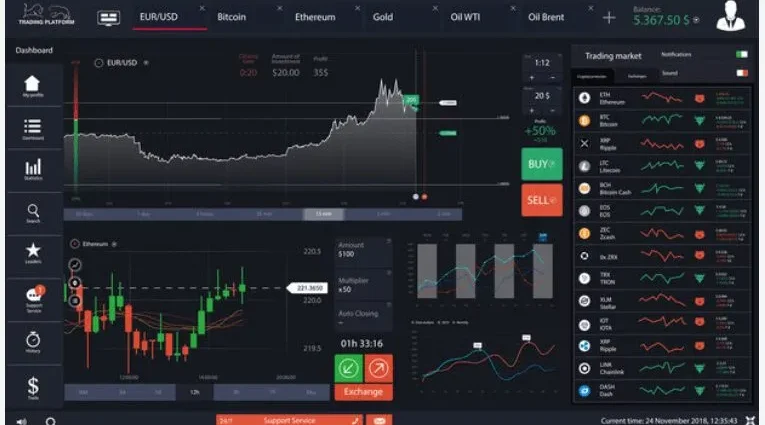
The forex market, also known as the foreign exchange market, is the world’s largest financial market, with over $6 trillion traded daily. But why does it hold such significance for traders? Unlike other financial markets, Forex operates 24 hours a day, five days a week, providing continuous opportunities for trading. Its size and liquidity make it possible for traders to execute transactions quickly and at competitive costs.
Forex trading involves buying one currency while simultaneously selling another. The variety of available currency pairs—ranging from highly traded majors like EUR/USD to less common exotic pairs—offers flexibility and choice, allowing traders to align their strategies with market conditions and risk tolerance.
Why Are Major Currency Pairs Popular Among Traders?
Major currency pairs, which include combinations such as EUR/USD, USD/JPY, and GBP/USD, are the most liquid in the market. But what makes them the preferred choice for many traders? High liquidity ensures tighter spreads, faster execution, and predictable price behavior. This reduces trading costs and allows for more precise market entry and exit points.
Major pairs are also influenced by robust economic indicators, central bank policies, and global market trends. This provides traders with clear data points for analysis and strategy development. Their stability and predictability make them suitable for both beginners and professional traders seeking consistency in performance.
What Are Exotic Currency Pairs and How Do They Differ?
Exotic currency pairs combine a major currency with a currency from a smaller or emerging market, such as USD/TRY or EUR/ZAR. But why trade exotic pairs? These pairs often exhibit higher volatility and wider spreads, which can create both challenges and opportunities.
While the risks are elevated due to lower liquidity and sensitivity to local economic and political events, exotic pairs allow traders to capture significant price movements and diversify their trading strategies. Knowledge of macroeconomic conditions, geopolitical factors, and currency correlations is crucial when trading exotics.
How Do Forex Trading Hours Affect Strategy?
Forex operates continuously through overlapping sessions in Asia, Europe, and North America. But how does this influence trading decisions? Each session has distinct characteristics: the Asian session tends to be quieter, with less volatility, while the European and North American sessions feature higher liquidity and more pronounced market movements.
Understanding session dynamics helps traders time entries and exits more effectively. For instance, EUR/USD may exhibit the most significant moves during the European session, while USD/JPY activity peaks during Asian trading hours. Aligning strategies with session activity enhances the potential for profitable trades.
Why Is Liquidity Important in Forex Trading?
Liquidity refers to the ease with which an asset can be bought or sold without impacting its price. Why is this critical in Forex? High liquidity, typically seen in major pairs, ensures narrow spreads, efficient trade execution, and minimal slippage.
Exotic pairs, however, often have lower liquidity, which can increase spreads and execution risk. Traders must adjust strategies for these pairs, accounting for potential slippage, wider spreads, and market gaps. Proper liquidity awareness helps manage risk and optimize trading performance.
How Do Economic Indicators Impact Currency Movements?
Currency prices are highly sensitive to economic indicators. But which ones should traders focus on? Interest rates, inflation reports, GDP data, employment figures, and trade balances significantly influence currency strength and volatility.
For example, a stronger-than-expected US employment report may boost the US Dollar, while a central bank rate cut in the Eurozone can weaken the Euro. Monitoring these indicators allows traders to anticipate market reactions and make informed trading decisions. Combining economic analysis with technical tools provides a holistic approach to Forex trading.
What Role Does Technical Analysis Play in Forex?
Technical analysis is a fundamental part of Forex trading, but how does it support decision-making? By studying historical price patterns, support and resistance levels, and indicators like moving averages and RSI, traders can identify trends and potential reversal points.
Technical analysis complements fundamental insights by providing visual cues for entry and exit points. For traders, integrating technical and fundamental perspectives enhances accuracy, reduces emotional trading, and enables consistent strategy execution.
Why Is Risk Management Essential in Forex Trading?
Risk management protects traders from significant losses, but how is it applied in Forex? Given the market’s volatility and leverage availability, uncontrolled positions can quickly lead to account depletion.
Key strategies include position sizing, stop-loss orders, diversification across currency pairs, and careful use of leverage. By systematically managing risk, traders maintain capital, preserve confidence, and create the foundation for sustainable profitability. Risk control is especially vital when trading exotic pairs with higher volatility.
How Does Leverage Influence Trading Opportunities?
Leverage allows traders to control larger positions with relatively small capital. But how should it be used responsibly? While leverage can magnify profits, it also increases potential losses. Traders must consider account size, volatility, and risk tolerance when applying leverage.
Proper leverage management ensures that traders can capitalize on opportunities in both major and exotic pairs without exposing themselves to excessive risk. A disciplined approach to leverage is essential for long-term trading success.
What Advantages Do Analytics and Market Tools Provide?
Analytics and market tools equip traders with insights needed for informed decisions. How do these resources help? They provide real-time data, historical trends, volatility metrics, and market sentiment indicators.
Tools like trading platforms with advanced charting, automated systems, and economic calendars allow traders to monitor multiple pairs simultaneously and respond promptly to market changes. Integrating these insights into trading strategies improves precision, confidence, and decision-making efficiency.
Why Is Continuous Learning Important in Forex?
The Forex market is dynamic, influenced by economic, political, and technological changes. Why is continuous learning critical for traders? Staying updated on market developments, strategy innovations, and analytical methods ensures traders remain adaptable and competitive.
Educational resources such as webinars, tutorials, simulated trading exercises, and analytical reports help traders refine skills without financial risk. Consistent learning strengthens decision-making, builds confidence, and enhances the ability to respond to evolving market conditions.
How Do Market Sentiment and News Impact Currency Pairs?
Market sentiment reflects the collective mood of traders and can significantly affect currency prices. How can traders interpret sentiment effectively? Sentiment indicators, positioning data, and news analysis reveal whether markets are overly bullish or bearish.
By combining sentiment analysis with technical and fundamental insights, traders can anticipate potential reversals, manage risk, and make more informed decisions. Monitoring global news events is particularly critical when trading exotic pairs, which are often more sensitive to political and economic developments.
What Strategies Help Traders Navigate Major and Exotic Pairs?
Successful Forex strategies balance risk, reward, and adaptability. Which approaches are most effective? Traders often employ trend-following, breakout, carry, and news-based strategies, complemented by stop-loss management, position sizing, and diversification.
Adapting strategies based on market conditions, economic events, and currency behavior ensures that traders remain flexible. A systematic, disciplined approach increases the probability of consistent returns while mitigating exposure to adverse events.
How Does Diversification Improve Forex Trading Outcomes?
Diversification reduces dependency on a single market or currency. But how does it work in Forex? By trading multiple pairs, including both majors and exotics, traders can balance stable opportunities with high-reward scenarios.
Diversification also spreads risk across different regions and economic conditions, supporting long-term performance and resilience. Combining pairs with varying volatility and liquidity levels allows traders to optimize strategies and manage overall portfolio risk effectively.
Can Forex Trading Provide Career Growth Opportunities?
Forex trading is often seen as short-term speculation, but can it lead to career growth? With education, discipline, and experience, trading can evolve into a sustainable profession. Professional traders develop expertise in analysis, strategy, and risk management, and may expand into portfolio management, advisory roles, or automated trading systems.
Long-term success requires ongoing learning, strategy adaptation, and performance evaluation. The Forex market’s depth and global reach offer ample opportunities for continuous skill development and career advancement.
Conclusion: How Does Forex Offer Opportunities Across Major and Exotic Currency Pairs?
The Forex market provides traders with extensive opportunities to trade both major and exotic currency pairs. By leveraging economic insights, technical tools, risk management strategies, and market sentiment analysis, traders can make informed and confident decisions.
Major currency pairs offer stability, tight spreads, and predictable movements, while exotic pairs provide higher volatility and potential for larger gains. Combining careful analysis, strategic execution, and diversification creates a balanced approach that maximizes opportunities while minimizing risk.
Traders who commit to continuous learning, disciplined risk management, and systematic strategy implementation are well-positioned to succeed in Forex. With access to analytics, insights, and global market data, the Forex market empowers traders to navigate complex currency landscapes, capture profitable opportunities, and achieve long-term trading success.