
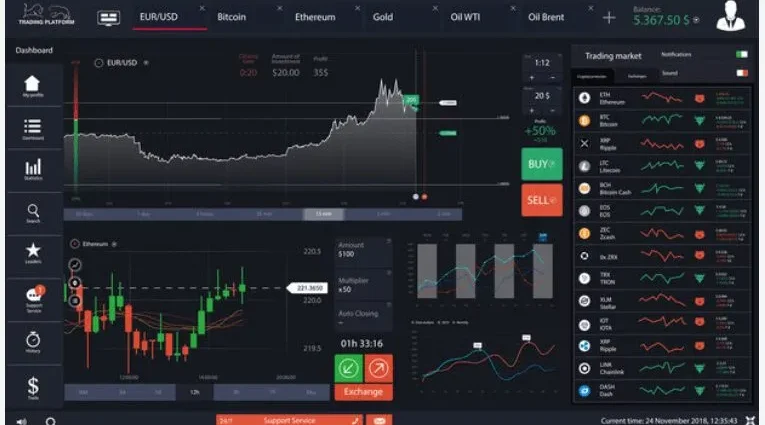
Proprietary trading firms, commonly referred to as prop trading firms, are organizations that allow skilled traders to trade the firm’s capital instead of their own. Unlike retail trading, where traders invest personal funds in the markets, prop trading firms operate with company-provided accounts. The goal is simple: traders generate profits, and the firm shares a percentage of those profits as compensation.
Prop trading firms differ significantly from traditional investment firms because they focus on leveraging human expertise rather than large institutional capital alone. These firms often provide advanced trading tools, structured risk management systems, and comprehensive support to ensure that traders can maximize their potential while limiting unnecessary risk exposure.
Why Do Traders Choose Prop Trading Firms?
One of the primary reasons traders gravitate toward prop trading firms is the access to capital. Many talented traders have strategies and skills but lack the necessary funds to execute them effectively in the markets. By providing funded accounts, prop firms remove the barrier of personal capital limitations.
In addition to capital, prop trading firms offer a suite of tools and resources. These include market analysis software, real-time data feeds, automated trading platforms, and backtesting solutions. With these resources, traders can refine strategies, test hypotheses, and implement trades with confidence.
How Do Prop Trading Firms Structure Profit Sharing?
Profit-sharing models vary among firms but generally follow a performance-based structure. Typically, the trader receives a percentage of profits generated from their trades, while the firm retains the remainder. This approach ensures alignment between the trader’s success and the firm’s profitability.
Some firms also offer tiered profit-sharing schemes. For instance, higher performance may unlock greater profit percentages or access to larger capital pools. This motivates traders to refine strategies continually and maintain disciplined risk management practices.
What Are the Key Advantages of Funded Trading Accounts?
Funded trading accounts offer several advantages for both emerging and experienced traders.
- Reduced Financial Risk: Traders do not need to invest personal capital, significantly lowering financial pressure.
- Access to Professional Resources: Traders gain tools, software, and analytics often unavailable to independent traders.
- Structured Risk Management: Firms enforce risk limits, ensuring that traders adhere to disciplined trading practices.
- Opportunity for Growth: Skilled traders can scale their profits and access larger capital allocations as they demonstrate consistent success.
How Do Prop Firms Support Skill Development?
Prop trading firms are not only capital providers—they often act as training hubs for skill enhancement. Many firms conduct workshops, strategy sessions, and performance reviews. Traders can learn from experienced mentors, understand market nuances, and develop robust trading habits.
Advanced analytics and performance metrics also play a critical role. Traders receive detailed insights into trade execution, risk-adjusted performance, and potential areas for improvement. This data-driven approach fosters continuous learning and measurable growth over time.
What Types of Traders Benefit Most from Prop Trading?
Prop trading is particularly suited for disciplined, technically skilled traders who have tested strategies but need capital to maximize their impact. Day traders, swing traders, and quantitative traders often find prop trading firms attractive due to structured environments, low personal financial risk, and scalable opportunities.
Traders with strong risk management skills and a consistent trading record tend to succeed faster. Prop firms look for individuals capable of analyzing market trends, executing strategies effectively, and managing emotions during market volatility.
How Do Prop Firms Evaluate Trader Performance?
Evaluation criteria differ between firms but generally focus on profitability, risk adherence, and consistency. Metrics such as drawdown, win-loss ratios, and average trade duration are commonly analyzed. Firms often set performance thresholds before granting increased capital or higher profit-sharing percentages.
This structured evaluation ensures that capital is allocated to traders who demonstrate a blend of skill, discipline, and adaptability. By maintaining these standards, firms protect both their financial interests and the long-term growth of their traders.
Why Are Advanced Tools Critical for Prop Traders?
Access to sophisticated trading tools is a defining feature of prop trading. These tools include algorithmic trading platforms, charting software, economic calendars, and market scanners. They enable traders to react quickly to market movements, identify trends, and execute strategies efficiently.
For example, algorithmic trading tools can automate repetitive tasks, allowing traders to focus on strategy optimization. Similarly, backtesting software helps traders evaluate historical performance and refine strategies without risking capital. These technological advantages are often the difference between a profitable and an unsuccessful trading experience.
What Role Does Risk Management Play in Prop Trading?
Risk management is the backbone of any successful prop trading firm. Firms establish clear rules regarding maximum drawdowns, position sizing, and leverage usage. Traders are expected to follow these guidelines rigorously, as deviation can result in financial loss or termination of the funded account.
By enforcing risk limits, prop firms protect both their capital and the trader’s potential earnings. This disciplined approach encourages long-term growth rather than short-term speculation. Risk management also teaches traders to develop emotional resilience, an essential trait in fast-moving financial markets.
How Does Technology Enhance the Prop Trading Experience?
Technology is integral to prop trading success. From real-time market data feeds to predictive analytics, these tools allow traders to make informed decisions under pressure. Cloud-based platforms and remote access also enable traders to operate efficiently from virtually any location.
Moreover, AI-driven tools are increasingly incorporated into prop trading systems. These applications can analyze market sentiment, predict volatility patterns, and provide actionable insights. By combining human intuition with machine learning, traders gain a competitive edge that is difficult to achieve independently.
Can Prop Trading Firms Help Traders Scale Profits?
Yes, prop trading firms are designed to scale the success of their traders. As traders demonstrate consistent profitability, firms often increase capital allocations. This allows traders to take larger positions and potentially earn higher profits without additional personal investment.
Additionally, advanced analytics and strategy support provided by firms help traders refine approaches, uncover inefficiencies, and identify new opportunities. The combined effect of capital access, professional tools, and mentorship significantly accelerates growth potential.
What Are Common Misconceptions About Prop Trading?
Despite its benefits, some misconceptions exist regarding prop trading:
- Prop Trading Guarantees Success: While firms provide resources, success still depends on skill, discipline, and strategy.
- Only Experienced Traders Can Join: Many firms offer structured programs for emerging traders willing to learn and develop skills.
- High Risk Means High Reward Always: Prop trading enforces strict risk limits to prevent catastrophic losses.
Clarifying these misconceptions is crucial for traders to make informed decisions when exploring prop trading opportunities.
How Do Prop Trading Firms Differ from Hedge Funds?
While both prop trading firms and hedge funds operate in financial markets, there are notable differences. Hedge funds typically manage client capital and aim to generate returns for investors, whereas prop trading firms use their own capital to empower traders. Profit structures, risk management, and operational focus differ significantly, making prop trading more accessible for individual traders seeking direct performance incentives.
What Is the Future of Prop Trading?
The future of prop trading is closely tied to technological advancements and market evolution. AI-driven analytics, automated execution systems, and global connectivity are shaping a new era of trading opportunities. Firms are likely to provide increasingly sophisticated platforms while maintaining the human element of mentorship and strategy development.
As financial markets continue to grow in complexity, prop trading firms that combine capital access, technology, and education will remain central to supporting skilled traders and fostering market innovation.
Conclusion: Why Prop Trading Firms Matter for Skilled Traders
Prop trading firms bridge the gap between talent and opportunity. By providing capital, professional tools, and guidance, these firms enable traders to unlock their full potential. With structured risk management, performance evaluation, and skill development support, prop trading offers a pathway for disciplined traders to achieve scalable profits while minimizing personal financial exposure.
For skilled traders, joining a prop trading firm is more than an opportunity to trade with funded accounts—it is a platform for continuous learning, professional growth, and measurable success in today’s competitive financial markets.