
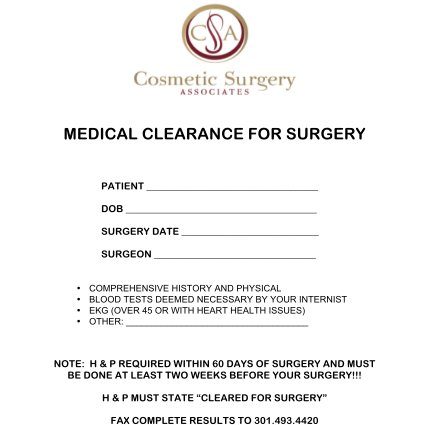
You can get medical clearance for cosmetic surgery from your primary care physician or a board-certified plastic surgeon. It is essential to undergo thorough medical evaluations to ensure you are fit for the procedure. Your chosen healthcare provider will assess your overall health and review any potential risks before clearing you for cosmetic surgery. Remember, safety is a top priority when considering where you can get medical clearance for cosmetic surgery.

Where Can I Get Medical Clearance for Cosmetic Surgery?
Cosmetic surgery has become increasingly popular in recent years, with more and more people opting to enhance their appearance through various procedures. However, before undergoing any cosmetic surgery, it is essential to obtain medical clearance to ensure that you are healthy enough to undergo the procedure safely. In this article, we will explore where you can get medical clearance for cosmetic surgery, the importance of medical clearance, and what to expect during the process.
What is Medical Clearance for Cosmetic Surgery?
Medical clearance for cosmetic surgery involves a thorough evaluation of your overall health to determine if you are a suitable candidate for the procedure. This evaluation is necessary to assess any potential risks or complications that may arise during or after surgery. A medical clearance typically includes a physical examination, review of your medical history, and various tests to ensure that you are in good health.
Where to Obtain Medical Clearance
When considering cosmetic surgery, there are several options for obtaining medical clearance:
1. Primary Care Physician
Your primary care physician is often the first point of contact for medical clearance for cosmetic surgery. They are familiar with your medical history and can perform a comprehensive evaluation to assess your overall health. Your primary care physician may conduct a physical examination, review your medical records, and order any necessary tests to ensure that you are fit for surgery.
2. Cosmetic Surgeon
Many cosmetic surgeons also have the expertise and resources to provide medical clearance for the procedures they perform. During your initial consultation with a cosmetic surgeon, they will evaluate your health and discuss any potential risks associated with the surgery. The surgeon may conduct their physical examination or work in conjunction with your primary care physician to obtain medical clearance.
3. Medical Specialist
In some cases, depending on your medical history or pre-existing conditions, your cosmetic surgeon may refer you to a medical specialist for further evaluation. Specialists such as cardiologists, pulmonologists, or endocrinologists may be consulted to ensure that your health is optimized for surgery. These specialists can provide additional insight into any specific health concerns that may impact your eligibility for cosmetic surgery.
The Importance of Medical Clearance
Obtaining medical clearance for cosmetic surgery is crucial for several reasons:
1. Ensures Safety
Medical clearance helps to ensure your safety during the surgery by identifying any underlying health issues that may increase the risk of complications. It allows healthcare providers to take necessary precautions and make informed decisions to minimize risks during the procedure.
2. Improves Surgical Outcomes
By assessing your health status before surgery, medical clearance can help improve surgical outcomes. Identifying and addressing any health concerns beforehand can lead to a smoother recovery process and better results post-surgery.
3. Peace of Mind
Knowing that you have received medical clearance for cosmetic surgery can provide peace of mind and alleviate any concerns about your health. It gives you confidence that you are in good hands and that the necessary precautions have been taken to ensure your well-being.
What to Expect During the Medical Clearance Process
The medical clearance process for cosmetic surgery typically involves the following steps:
1. Physical Examination
During a physical examination, your healthcare provider will assess your overall health, including vital signs, heart rate, blood pressure, and general physical condition. They may also examine specific areas of concern related to the planned surgery.
2. Medical History Review
Your healthcare provider will review your medical history, including any pre-existing conditions, medications, allergies, and previous surgeries. It is essential to provide accurate and detailed information to ensure an accurate assessment of your health status.
3. Diagnostic Tests
Depending on your age, health status, and the type of surgery planned, your healthcare provider may order diagnostic tests such as blood tests, imaging studies, electrocardiogram (ECG), or other specialized tests to evaluate your health further.
4. Consultation and Clearance
After completing the evaluation process, your healthcare provider will determine if you are cleared for the cosmetic surgery procedure. They will discuss the findings with you, address any concerns or recommendations, and provide clearance for the surgery if deemed appropriate.
In conclusion, obtaining medical clearance for cosmetic surgery is a crucial step in ensuring your safety and well-being during the procedure. Whether you obtain clearance from your primary care physician, cosmetic surgeon, or a medical specialist, it is essential to undergo a thorough evaluation of your health before undergoing any surgical procedure. By obtaining medical clearance and following the recommendations provided, you can increase the likelihood of a successful outcome and a smooth recovery process. Remember, your health is paramount, so always prioritize safety when considering cosmetic surgery.
Medical Clearance for Surgery
Frequently Asked Questions
Where can I obtain medical clearance for cosmetic surgery?
Medical clearance for cosmetic surgery can be obtained from a board-certified plastic surgeon or a qualified medical doctor specializing in aesthetics. These professionals will assess your overall health status, review your medical history, and perform necessary tests to ensure you are fit for the procedure.
What documents might I need to provide to receive medical clearance for cosmetic surgery?
When seeking medical clearance for cosmetic surgery, you will likely need to provide your medical history, including any past surgeries, current medications, and existing health conditions. You may also need to undergo specific medical tests such as blood work, ECG, or other diagnostic assessments to evaluate your fitness for the procedure.
Can my primary care physician provide medical clearance for cosmetic surgery?
While your primary care physician may have insights into your medical history, it is recommended to seek medical clearance from a specialist in cosmetic surgery or aesthetics. These specialists have the expertise to evaluate the specific risks associated with cosmetic procedures and can provide tailored recommendations based on their assessment.
Final Thoughts
In conclusion, when seeking medical clearance for cosmetic surgery, consult a board-certified plastic surgeon or your primary care physician. They will assess your overall health and provide the necessary clearance for the procedure. Make sure to be transparent about your medical history and any current medications. Remember, where you can get medical clearance for cosmetic surgery ultimately depends on the expertise and guidance of qualified healthcare professionals. Prioritize your safety and well-being throughout the entire process.